

The Future of Software Development with AI and Automation
I am sharing a message I understood from an article I read today: In the future, we will all have to go through the same situation as software engineers.
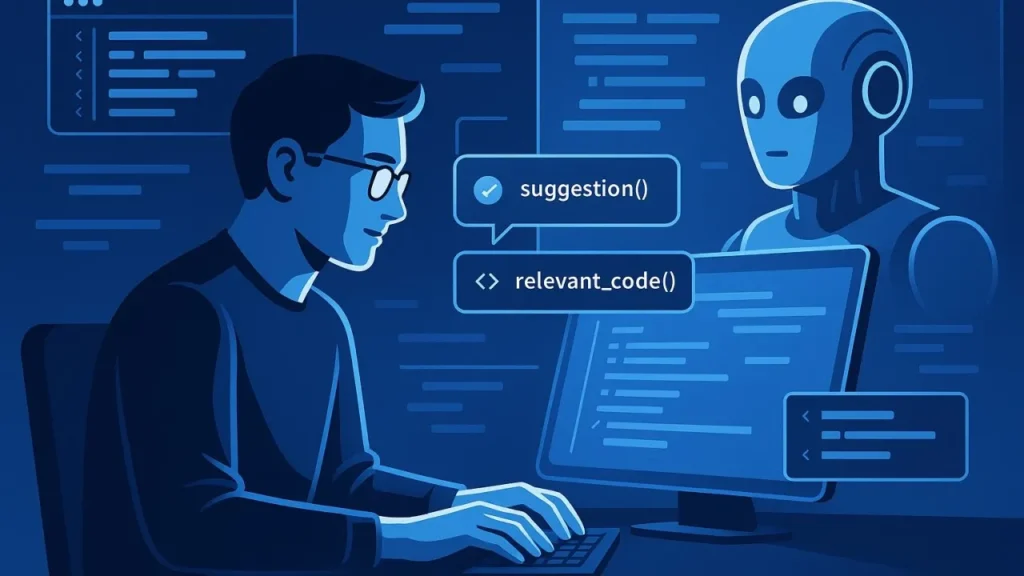
The concept of the AI-Augmented Software Engineer is rapidly reshaping the way modern development works. Instead of replacing programmers, artificial intelligence is becoming a powerful assistant that helps developers write code faster, detect bugs earlier, and automate repetitive tasks. As AI tools become integrated into development environments, the role of the is evolving into a new standard for productivity, innovation, and efficiency in the software industry.
An augmented engineer uses artificial intelligence tools as collaborative partners rather than viewing them as competitors. AI systems now assist developers in writing code, detecting errors, generating documentation, and improving software performance. By combining human creativity with machine intelligence, developers can build complex applications faster and more efficiently than ever before.
Recent industry research indicates that AI adoption among software developers has reached nearly 90%, making AI-powered tools an essential component of modern programming environments. Moreover, more than 80% of developers report improved productivity when using AI assistance, while a significant portion also observes improvements in code quality and development speed.
This shift represents more than a simple productivity boost. It signals the emergence of a new development paradigm where humans and intelligent machines collaborate throughout the entire Software Development Lifecycle (SDLC).
The Rise of the AI-Augmented Developer
Artificial intelligence is redefining how developers approach programming tasks. Instead of manually writing every line of code, engineers can now interact with AI models that generate code suggestions based on context and natural language instructions.
AI-powered tools act as intelligent assistants, helping developers accelerate routine tasks and focus on more strategic aspects of software creation.
How AI Enhances Developer Productivity
Artificial intelligence contributes to software development in several ways:
- Automating repetitive coding tasks
- Suggesting optimized algorithms
- Detecting bugs and vulnerabilities
- Improving documentation quality
- Accelerating testing and debugging processes
By reducing the time spent on routine operations, developers can dedicate more effort to design, innovation, and problem-solving.
This shift allows engineering teams to deliver software faster without sacrificing quality or reliability.
AI Across the Software Development Lifecycle
AI is no longer limited to a single phase of development. Today, intelligent tools are integrated into nearly every stage of the Software Development Lifecycle (SDLC).
Intelligent Code Generation
One of the most widely used applications of AI in programming is automated code generation.
Tools such as AI-powered coding assistants can analyze the context of a project and suggest entire functions or classes. These assistants go far beyond traditional autocomplete features by understanding programming logic and generating meaningful code structures.
Developers can now describe a function using natural language, and the AI system will produce a working code snippet. This capability significantly reduces the time required to build applications.
This technology also helps reduce the cognitive load on programmers by minimizing repetitive coding patterns.
AI-Driven Debugging and Code Analysis
Debugging has traditionally been one of the most time-consuming parts of programming. AI tools are now transforming this process by analyzing large codebases and identifying potential issues automatically.
Machine learning models trained on vast datasets of programming errors can detect:
- Syntax mistakes
- Performance inefficiencies
- Security vulnerabilities
- Poor coding practices
Some advanced tools use both Static Code Analysis (SCA) and Dynamic Code Analysis (DCA) to evaluate code quality from multiple perspectives.
Instead of manually scanning thousands of lines of code, developers receive intelligent suggestions that guide them directly to the root of a problem.
AI-Powered Software Testing
Testing is a critical stage of software development, ensuring that applications function correctly under different conditions.
Artificial intelligence is revolutionizing this process through automated test generation.
AI-based testing tools can:
- Generate test cases automatically
- Identify edge cases that manual testers might overlook
- Simulate multiple user scenarios
- Improve test coverage significantly
By automating these tasks, engineers can focus on designing advanced testing strategies rather than performing repetitive checks.
Intelligent Documentation and Maintenance
Documentation is often overlooked during rapid development cycles. However, clear documentation is essential for maintaining large software systems.
AI tools can now analyze codebases and automatically generate:
- Code comments
- Technical documentation
- Pull request summaries
- System architecture descriptions
These automated systems ensure that documentation evolves alongside the software, improving collaboration between teams and simplifying long-term maintenance.
The Human Advantage in the Age of AI
Despite the rapid growth of AI technologies, the human developer remains central to software engineering.
AI excels at automating repetitive tasks and recognizing patterns, but it still lacks the deeper cognitive abilities required for complex engineering challenges.
Creativity and Innovation
Designing innovative software solutions requires imagination and creativity. Developers must conceptualize new products, design unique algorithms, and create intuitive user experiences.
AI can assist with implementation, but true innovation still originates from human insight and creativity.
Strategic Decision Making
Software engineering involves numerous strategic decisions related to performance, scalability, and business requirements.
Developers must consider:
- System architecture
- Infrastructure costs
- User requirements
- Security considerations
AI tools can provide suggestions, but humans must ultimately evaluate these options and make informed decisions.
Collaboration and Communication
Large software projects require teamwork between engineers, designers, product managers, and stakeholders.
Developers must communicate technical concepts clearly, mentor junior engineers, and collaborate across multiple departments.
These interpersonal skills remain uniquely human and play a critical role in successful software development.
Challenges of Integrating AI in Software Engineering
While AI offers tremendous benefits, it also introduces several challenges that developers and organizations must address.
The Trust Paradox
Interestingly, many developers use AI tools daily but remain cautious about trusting them completely.
AI-generated code must still be reviewed carefully to ensure it is accurate and secure. Developers often treat AI suggestions as starting points rather than final solutions.
The Black Box Problem
Complex AI models sometimes operate as “black boxes,” meaning their decision-making processes are difficult to understand.
This lack of transparency can make debugging challenging and reduce developer confidence in AI-generated results.
As a result, researchers are exploring Explainable AI (XAI) techniques that make AI reasoning more transparent.
Security and Code Quality Concerns
AI systems learn from massive datasets that may contain outdated or insecure code.
Consequently, AI-generated solutions may occasionally introduce vulnerabilities or inefficient algorithms.
To address this issue, developers must combine AI tools with strong code review and security scanning practices.
Mixed Productivity Outcomes
Although AI tools often increase productivity, the benefits can vary depending on the complexity of the project.
For simple tasks, AI can dramatically reduce development time. However, for complex systems, developers may spend additional time reviewing and correcting AI-generated suggestions.
This highlights the importance of human oversight in AI-assisted development.
The Future of Software Engineering: Multi-Agent AI Systems
The next major innovation in software development involves multi-agent AI systems.
Instead of relying on a single AI assistant, future development environments may include multiple specialized agents working together.
For example:
- One AI agent generates code
- Another reviews code quality
- A third creates documentation
- Another performs automated testing
These agents collaborate within an integrated ecosystem, allowing large portions of the development workflow to be automated under human supervision.
Developers will increasingly act as orchestrators of AI systems, guiding and supervising multiple intelligent tools.
Essential Skills for Developers in the AI Era
As AI continues to reshape programming, developers must adapt by developing new skills.
Prompt Engineering
Prompt engineering refers to the ability to communicate effectively with AI systems using natural language instructions.
Well-crafted prompts allow developers to obtain more accurate and useful AI-generated results.
AI Supervision and Evaluation
Developers must carefully review AI-generated code and ensure that it meets performance, security, and maintainability standards.
Human oversight will remain essential for ensuring reliable software systems.
System Architecture and Design
As AI handles more coding tasks, developers will focus increasingly on high-level system architecture.
Designing scalable, secure, and maintainable software systems requires deep technical expertise and strategic thinking.
Conclusion
Artificial intelligence is transforming software engineering in profound ways. Instead of replacing developers, AI is empowering them to work more efficiently and creatively.
The rise of the AI-augmented engineer represents a new model of collaboration between humans and machines. By automating repetitive tasks and providing intelligent insights, AI allows developers to focus on innovation, architecture, and strategic decision-making.
However, the future of software development will depend on balancing automation with human expertise. Developers who learn to collaborate effectively with AI tools will be best positioned to thrive in this rapidly evolving technological landscape.
The most successful engineers of the future will not simply write code—they will guide intelligent systems, design complex architectures, and orchestrate AI-driven development workflows.